Monday, 7 June 2021

B.J. Thomas (1942-2021)


B.J. Thomas, ‘Raindrops keep fallin’ on my head’ singer, dies at 78

By Bill Friskics-Warren

30 May 2021

B.J. Thomas, a country and pop hitmaker and five-time Grammy winner who contributed to the Southernization of popular music in the 1960s and 1970s, died on Saturday, 29 May 2021, at his home in Arlington, Texas. He was 78.

The cause was complications of lung cancer, said a spokesman, Jeremy Westby of 2911 Media.

Mr. Thomas’s biggest hit was “Raindrops keep fallin’ on my head,” which was originally featured in the 1969 movie “Butch Cassidy and the Sundance Kid” and spent 4 weeks at # 1 of the pop chart in early 1970; 3rd January 1970 to 24 January 1970.

Written and produced by Burt Bacharach and Hal David, “Raindrops” — a cheery ditty about surmounting life’s obstacles — won the Academy Award for best original song later that year. Mr. Thomas’s recording was inducted into the Grammy Hall of Fame in 2014.

Mr. Thomas placed 15 singles in the pop Top 40 from 1966 to 1977. “(Hey won’t you play) Another somebody done somebody wrong song,” a monument to heartache sung in a bruised, melodic baritone, reached # 1 on both the country and pop charts on 26 April 1975.

“Hooked on a feeling,” an exultant expression of newfound love from 1968, also reached # 5 (for 2 weeks) on 11 January 1969  (Augmented by an atavistic chant of “Ooga-chaka-ooga-ooga,” the song became a # 1 pop hit as recorded by the Swedish rock band Blue Swede on 6 April 1974.)

Mr. Thomas’s records helped introduce a smooth, down-home sensibility to the AM airwaves, an approach shaped by the fusion of country, gospel, rock and R&B in the music of Elvis Presley. This uniquely Southern mix of styles became common currency on radio playlists across the nation, recognizable as well in hits by singers with similarly expressive voices like Brook Benton and Conway Twitty.

“I try to give the soft pop sound a natural relaxed feeling,” Mr. Thomas said in “Home where I belong,” a memoir written with Jerry B. Jenkins. “I guess that’s why my records always cross over and are good sellers on the pop and rock charts, as well as country.”

His debt to Presley’s romantic crooning notwithstanding, Mr. Thomas cited the music of Black R&B singers like Little Richard and Jackie Wilson as his greatest vocal inspiration.

“We all loved Elvis and Hank Williams, but I think Wilson had the biggest influence on me,” he said in his memoir. “I couldn’t believe what he could do with his voice. I’ve always tried to do more with a note than just hit it, because I remembered how he could sing so high and so right, really putting something into it.”

Mr. Wilson’s stamp is evident on “Mighty clouds of joy,” a rapturous, gospel-steeped anthem that reached # 8 at the Billboard chart for Mr. Thomas on 21st August 1971. His command of musical dynamics is especially impressive on the chorus, where, lifting his voice heavenward, he goes from a hushed whisper to a flurry of ecstatic wailing before bringing his vocals back down to a murmur for the next verse.

Mr. Thomas came by his sense of redemption the hard way. He struggled for the better part of 10 years with a dependence on drugs and alcohol that almost destroyed his marriage and his life. After getting clean in the mid-70s, he enjoyed parallel careers as a country and gospel singer, releasing three No. 1 country singles over the ensuing decade and winning five Grammy Awards in gospel categories.

Billy Joe Thomas was born on 7 August 1942, in Hugo, Okla., the second of three children of Vernon and Geneva Thomas. He was raised in Rosenberg, Texas, some 40 miles southwest of Houston. The family was poor, a condition exacerbated by his father’s violent temper and drinking. As an adolescent, B.J. (as he had come to be called playing Little League baseball) sang in the Baptist church his family attended.

While in high school he and his older brother, Jerry, joined a local pop combo, the Triumphs, with Mr. Thomas singing lead. In 1966, after three years of playing at dances and American Legion halls, the band had its first hit with a rendition of Hank Williams’s “I’m so lonesome I could cry” that reached # 8 on 9 April 1966. 'Mama' reached # 22 on 18 June 1966.

Credited to B.J. Thomas & the Triumphs and issued on the small Pacemaker label, the record was eventually picked up for distribution by the New York-based Scepter Records, home to major pop artists of the day like Dionne Warwick and the Shirelles. With sales of more than a million copies, it secured Mr. Thomas a place on the bill of a traveling rock ’n’ roll revue hosted by Dick Clark, the “American Bandstand” host and producer.

Despite the persistence and severity of his alcohol and drug use, Mr. Thomas’s recordings remained a constant on the pop chart for the next decade. 'I just can't help believing' was # 9 on 22nd August 1970; 'Oh me oh my' never charted in the USA but it reached # 2 in Brazil, on 11 September 1971.

'Long ago tomorrow' only managed to hit # 61 on 18 December 1971, but “Rock and roll lullaby,” reached # 15 on 1st April 1972, featuring Duane Eddy on guitar and backing vocals from Darlene Love and The Blossoms. Three years earlier, Mr. Thomas had enjoyed an extended run at the Copacabana in New York, brought about by the runaway success of “Hooked on a feeling.”

He started on the path to recovery after converting to Christianity in the mid-70s, a period in which he also reconciled with his wife, Gloria, after repeated separations. In 1977, following a year or so in recovery, he sang at the memorial service for Presley, whose death that year had largely been attributed to his excessive use of prescription medications.

Mr. Thomas continued to make albums and tour into the 2000s. 'Whatever happened to old fashioned love songs?' was Billboard's # 93 on 21st May 1983, but played a lot on the Australian airwaves Over the years he also sang and testified at the evangelical crusades of Billy Graham and other large religious gatherings.

He is survived by Gloria Richardson Thomas, his wife of 53 years; three daughters, Paige Thomas, Nora Cloud and Erin Moore; and four grandchildren.

At its smoothest and most over-the-top, Mr. Thomas’s music could border on schmaltz. But at its most transcendent, as on the stirring likes of “Mighty clouds of joy,”  he inhabited the junction of spirituality and sentiment with imagination and aplomb, making records that had many listeners singing along.

“The greatest compliment a person could pay my music is to listen and sing along with it and think that he can sing just as good as me,” Mr. Thomas said in his memoir, alluding to the accessibility of his performances. “He probably can’t, of course, or he’d be in the business, but I want it to sound that way anyway.”


Saturday, 1 May 2021

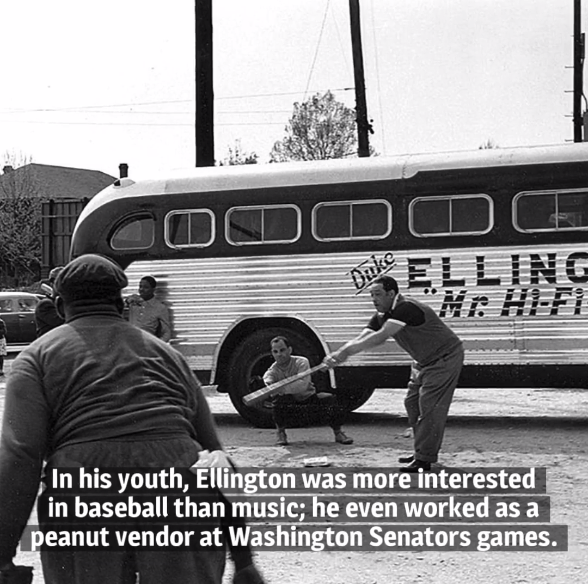
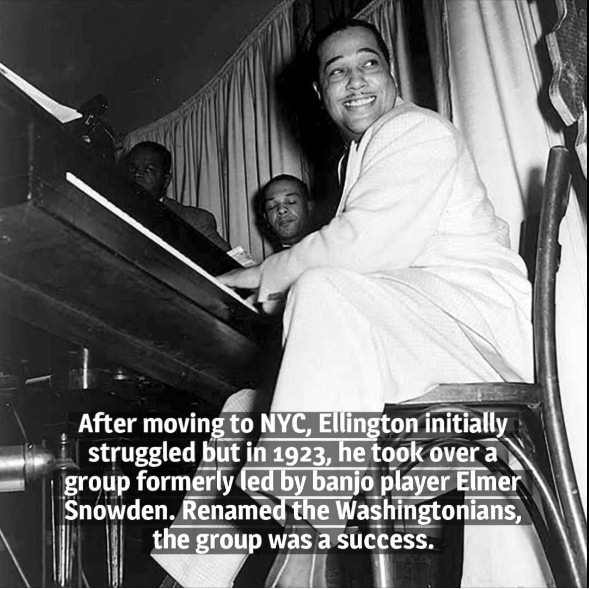
Duke Ellington

Duke Ellington may not be exactly 60s or 70s but he was everything... and besides, I'm proud to say I saw Duke Ellington in person in the early fall of 1972 (two year before he died on 24 May 1974) waiting for a cab in front of the Madison Square Garden. I saw that giant of a man trying to catch a cab and I knew instantly that he was the legendary Duke Ellington even though nodoby seemed to pay attention to him. He wore an over coat and was super elegant... 


Tuesday, 16 March 2021

Sally Grossman, the girl on the cover of Bob Dylan's 'Bringing it all back home' (1965)


Sally Grossman, immortalized on a Dylan album cover, dies at 81

She picked out a red outfit and struck a relaxed pose on the cover of “Bringing it all back home,” leaving much for fans to guess about.

Bob Dylan wanted his manager’s wife, Sally Grossman, to appear on the cover of his 1965 album taken at her home in Woodstock, N.Y. 

By Neil Genzlinger

15 March 2021

One of Bob Dylan’s most important early albums, “Bringing it all back home” from 1965, has the kind of cover that can strain eyes and fuel speculation. It is a photograph of Mr. Dylan, in a black jacket, sitting in a room full of bric-a-brac that may or may not mean something, staring into the camera as a woman in a red outfit lounges in the background.

“Fans became so fixated on deciphering it,” the music journalist Neil McCormick wrote in The Daily Telegraph of London last year, “that a rumor took hold that the woman was Dylan in drag, representing the feminine side of his psyche.”

She wasn’t. She was Sally Grossman, the wife of Mr. Dylan’s manager at the time, Albert Grossman.

“The photo was shot in Albert Grossman’s house,” the man who took it, Daniel Kramer, told The Guardian in 2016. “The room was the original kitchen of this house that’s a couple hundred years old.”

“Bob contributed to the picture the magazines he was reading and albums he was listening to,” Mr. Kramer added, a reference to the bric-a-brac. “Bob wanted Sally to be in the photo because, well, look at her! She chose the red outfit.”

Ms. Grossman died on Thursday, 11 February 2021, at her home in the Bearsville section of Woodstock, N.Y., not far from the house where the photograph was taken. She had long been a fixture in Woodstock, operating a recording studio, a theater and other businesses there after her husband died of a heart attack at 59 in 1986. She was 81.

Her niece, Anna Buehler, confirmed her death and said the cause had not been determined.

Ms. Grossman in an undated photo, taken in the same room, against the same fireplace, in which the 1965 album cover photo was shot. She and her husband ran recording studios and restaurants in Woodstock, and after his death she created the Bearsville Theater there. 

She and her husband ran recording studios and restaurants in Woodstock, and after his death she created the Bearsville Theater there. 

Sally Ann Buehler was born on 22nd August 1939, in Manhattan to Coleman and Ann (Kauth) Buehler. Her mother was executive director of the Boys Club (now the Variety Boys and Girls Club) of Queens; her father was an actuary.

Ms. Grossman studied at Adelphi University on Long Island and Hunter College in Manhattan, but she was more drawn to the arts scene percolating in Greenwich Village.

“I figured that what was happening on the street was a lot more interesting than studying 17th-century English literature,” she told Musician magazine in 1987, “so I dropped out of Hunter and began working as a waitress. I worked at the Cafe Wha?, and then the Bitter End, all over.”

Along the way she met Mr. Grossman, who was making his name managing folk music acts that played at those types of venues, including Peter, Paul & Mary, whom he helped bring together.

“The office was constantly packed with people,” Ms. Grossman recalled in the 1987 interview. “Peter, Paul and Mary, of course, but also Ian & Sylvia, Richie Havens, Gordon Lightfoot, other musicians, artists, poets.”

The couple, who married in 1964, settled in Woodstock, where Mr. Grossman had acquired properties and which Mr. Dylan had also discovered about the same time, settling there with his family as well.

In due course came the photo shoot for the album cover.

“I made 10 exposures,” Mr. Kramer told The Minneapolis Star Tribune in 2014. One image, with Mr. Dylan holding a cat, was a keeper. “That was the only time all three subjects were looking at the lens,” Mr. Kramer said.

The photo, staged by Mr. Kramer with Mr. Dylan’s input, was an early example of what became a mini-trend of loading covers up with imagery that seemed to invite scrutiny for insights into the music. The Beatles’ “Sgt. Pepper’s Lonely Hearts Club Band” (1967) might be the best-known example.

The album itself was a breakthrough for Mr. Dylan, marking his transition from acoustic to electric. Its tracks included “Mr. Tambourine Man,” “Subterranean homesick blues” and “Maggie’s farm.”

Ms. Grossman and her husband established recording studios and restaurants in Bearsville, and after his death Ms. Grossman renovated a barn to create the Bearsville Theater, bringing to life a vision of her husband’s. It hosted numerous concerts over the years. She sold the businesses in the mid-2000s.

Ms. Grossman is survived by a brother, Barry Buehler.

Though she knew many American musicians, Ms. Grossman had a special place in her heart for an order of religious singers from Bengal known as the Bauls, whom she encountered in the 1960s. She created a digital archive of Baul music. Deborah Baker, author of “A Blue Hand: The Beats in India” (2008), wrote about Ms. Grossman and her connection to the Bauls in a 2011 essay in the magazine the Caravan.

“Despite all the famous musicians and bands who once passed through her life,” Ms. Baker wrote, “she found it was the Bauls she missed the most from those years.”

Ms. Grossman in an undated photo, taken in the same room, against the same fireplace, in which the 1965 album cover photo was shot. She and her husband ran recording studios and restaurants in Woodstock, and after his death she created the Bearsville Theater there. 

Tuesday, 2 March 2021

Alan Freed the man who created the name Rock'n'Roll


Alan Freed at the microphone of New York's WINS at the height of his popularity. Freed was born on 16 December 1921. 


Ed Sullivan, 5.7 & Buddy Holly, 2 feet tall. 
Buddy Holly at the Ed Sullivan Show... 
spunky Buddy Holly.
Chuck Berry, Sandy Stewart & Alan Freed in a glossy for 'Go, Johnny, go!' released in June 1959. 
Chuck Berry, Sandy Stewart, Alan Freed & Jimmy Clanton in 'Go, Johnny, go!'.
Chuck on guitar and Alan Freed on drums...


Sunday, 27 December 2020

Dr. John aka Mac Rebennack


Dr. John, of voodoo beads, feathers & New Orleans sound, dies at 77

6 June 2019.

Mac Rebennack, the pianist, singer, songwriter and producer better known as Dr. John, who embodied the New Orleans sound for generations of music fans, died on Thursday. He was 77.

A family statement released by his publicist said the cause was a heart attack. The statement did not say where he died. He had been living in recent years on the north shore of Lake Pontchartrain, La.

Mr. Rebennack belonged to the pantheon of New Orleans keyboard wizards that includes Professor Longhair, James Booker, Huey (Piano) Smith and Fats Domino. What distinguished him from his peers was the showmanship of his public persona.

Onstage as Dr. John, he adorned himself with snakeskin, beads and colorful feathers, and his shows blended Mardi Gras bonhomie with voodoo mystery.

He recorded more than 30 albums, including jazz projects (“Bluesiana Triangle,” 1990, with the drummer Art Blakey and the saxophonist David Newman), solo piano records (“Dr. John Plays Mac Rebennack,” 1981) and his version of Afropop (“Locked Down,” 2012). His 1989 album of standards, “In a sentimental mood,” earned him the first of six Grammy Awards, for his duet with Rickie Lee Jones on “Makin’ whoopee!”

His only Top 40 single, “Right place wrong time,” reached No. 9 on the Billboard chart on 30 June 1973. In 2011, he was inducted into the Rock & Roll Hall of Fame.

Malcolm John Rebennack Jr. was born in New Orleans on 21st November 1940. His mother, Dorothy (Cronin) Rebennack, worked as a model and in a music store. Malcolm Sr. owned an appliance store. Mac, as he came to be known, was a photogenic baby whose picture appeared on boxes of Ivory Soap.

He immersed himself in the sounds of New Orleans at a young age, first through the city’s radio stations and then by following his father to nightclubs, where Malcolm Sr. would repair P.A. systems while young Mac peered through the window, watching musicians like Professor Longhair rehearse.

Mr. Rebennack, a virtuoso on piano and guitar, was tutored by Walter (Papoose) Nelson, who played guitar with Fats Domino. “In the days when it was very difficult for a black guy and a white guy to socialize, for a Black guy to give a white guy guitar lessons” was “beyond beautiful,” Mr. Rebennack later recalled.

He started playing in clubs and on recording sessions as a teenager and dropped out of high school to pursue music full time.

He played guitar up to 18 hours a day, seven days a week — sitting in at Bourbon Street clubs and strip joints, leading his own bands, mixing players from the city’s segregated white and black musicians union, and recording more sessions than he could count.

“We used to do sessions every day, sometimes two or three a day, and you just scuffled to get through,” he remembered in 1973.

In his spare time, Mr. Rebennack wrote songs (he said he was the uncredited author of Lloyd Price’s 1960 hit “Lady Luck”) and worked as an A&R man at Ace Records.

He also nurtured a heroin habit and engaged in constant low-level criminal activity. “I tried all the hustles, but I was never good at most of them,” he wrote in his autobiography, “Under a Hoodoo Moon” (1994, with Jack Rummel). “Turned out the only scam I was good at was forging prescriptions.”

In late 1961, Mr. Rebennack interceded in a fight when a friend was being pistol-whipped; for his troubles, he took a bullet in his finger. The injury forced him to switch to piano and organ as his primary instruments. Not long afterward, the New Orleans district attorney, Jim Garrison, closed down many of the city’s nightclubs in an anti-vice crusade, and the local music scene collapsed. (Mr. Garrison went on to become a leading conspiracy theorist on the assassination of President John F. Kennedy.)

After a heroin arrest, Mr. Rebennack did time in prison, and when he got out, in 1965, he headed straight for Los Angeles.

In California, Mr. Rebennack added barrelhouse piano flavor to pop and rock records, doing sessions with Sonny & Cher, the O’Jays, Frank Zappa and others. The producer Phil Spector, he recalled, “would pack a studio with 30 violins, 10 horns, a battery of keyboards, basses, guitars, drums, which, mixed with much echo, became his famous ‘wall of sound.’ I thought to myself, What’s all this? Because in New Orleans we put out just as much sound with only six guys.”

After a few years, Mr. Rebennack recorded a session of his own, blending New Orleans R&B, Creole chants, psychedelic rock and mystical lyrics. He had intended the frontman persona, “Dr. John Creaux the Night Tripper,” to be played by a New Orleans buddy, Ronnie Barron; when Mr. Barron declined, Mr. Rebennack and his charismatic growl took center stage.

The Dr. John character made its debut on that album, “Gris-Gris,” which was released in 1968 on the Atco subsidiary of Atlantic Records. The album became a hit on underground FM radio on the strength of hypnotic tracks like “I Walk on Guilded Splinters.”

Mr. Rebennack further developed the Dr. John persona — the name was borrowed from a 19th-century voodoo priest — on the albums “Babylon” and “Remedies.” As he wrote in his autobiography: “In New Orleans, in religion, as in food or race or music, you can’t separate nothing from nothing. Everything mingles each into the other — Catholic saint worship with gris-gris spirits, evangelical tent meetings with spiritual-church ceremonies — until nothing is purely itself but becomes part of one fonky gumbo.”

Fans of those albums included Mick Jagger and Eric Clapton, both of whom appeared on Mr. Rebennack’s ill-fated 1971 concept album, “The Sun Moon & Herbs,” which was cut down from three discs to one when Mr. Rebennack became embroiled in a management dispute and lost control of the master tapes.

After that misfire, he took the suggestion of Jerry Wexler, the Atlantic Records executive who produced R&B heavyweights like Ray Charles and Aretha Franklin, and began recording songs, like “Iko Iko” and “Tipitina,” which were as fundamental to New Orleans as red beans and rice.

The resulting album, “Dr. John’s Gumbo,” produced by Mr. Wexler and released in 1972, paved the way for two records on which Mr. Rebennack was produced by Allen Toussaint and backed by the Meters.

As many albums as he made, however, Mr. Rebennack said he had earned more money cutting jingles. His clients included Popeyes chicken, Scott tissue and Oreo cookies. He also reached younger generations with his theme songs for the sitcom “Blossom” and the cartoon show “Curious George,” and through his Muppet musician doppelgänger, Dr. Teeth, leader of the Electric Mayhem.

In 1989, after 34 years of on-and-off addiction, Mr. Rebennack quit heroin. For several years he split his time between New Orleans and an apartment in the Washington Heights section of Manhattan, where he could be spotted with his trademark walking stick, adorned with voodoo beads, a yak bone, an alligator tooth and key rings from Narcotics Anonymous.

“I relate to people up there that kind of hangs on the streets,” he told The New York Times in 2010. Asked if he spoke Spanish, like many of the neighborhood’s residents, he said, “No, I don’t even speak English.”

A spokeswoman said his survivors include children and grandchildren but provided no other details.

New Orleans gave Mac Rebennack his musical identity, and he tried to uphold its traditions: as a recording artist, as a regular guest star on the HBO series “Treme” (playing himself) and as a frequent performer at the annual New Orleans Jazz and Heritage Festival. Even thousands of miles from Louisiana, however, he could invoke its musical magic.

One day in 1968, Mr. Rebennack visited the Topanga Canyon neighborhood of Los Angeles with the other members of his band. As he told the story in his memoir:

“We were down by this stream in the canyon and Charlie Maduell broke out his flute and started playing, and frogs started chirping to it. Didimus picked up some rocks and began playing a groove; Dave Dixon had found some kind of animal bones and began playing those. Stalebread Charlie had a tape recorder and taped our little nature jam. We called this the ‘Symphony of the Frogs.’ Before too long, all these naked people came down the creek bed, attracted by the music and the chirping, and started dancing.

“We were getting into the people dancing, and they were getting into our music. It all got very intense. When it died down some, Didimus said, ‘Hey, we should take this to the people.’ That’s how the Dr. John road show began.”

By Gavin Edwards

A version of this article appears in print on June 7, 2019, on Page A23 of the New York edition with the headline: Dr. John, of Voodoo Beads, Feathers and New Orleans Sound, Dies at 77. 


Such a night, such a night
sweet confusion under the moonlight
such a night, such a night
got to steal away, the time seem right
then your eyes met mine at a glance
you let me know this was my chance
(you) came here with my best friend Jim
here I am 'cause I'm gonna steal you away from him

oh baby, 
if I don't do it, somebody else will
If I don't do it, you know, you somebody else will

Such a night, such a night
sweet confusion under the moonlight
such a night, such a night
got to steal away, the time seem right
yeah, I couldn't believe my ear 
my heart just skipped a beat
you told me we could slip away down the dark end of the street
yeah, you came here with my best friend Jim
here I am, 'cause I'm gonna steal you away from him

baby, if I don't do it, somebody else will
if I don't do it, you know, somebody else will 
if I don't do it, you know, somebody else wil
if I don't do it, somebody else will.

Rebennack Mac 

Sunday, 15 November 2020

Bill Withers

 
Bill Withers whispers something on Mohamed Ali's ears...

'You couldn't harness Ali. He always was in perpetual motion. It would be like trying to catch a humming bird in your hands.' Bill Withers.

Ain't no sunshine when she's gone... 

Saturday, 7 November 2020

Jerry Jeff Walker, who wrote 'Mr. Bojangles', dies at 78.

Jerry Jeffe Walker performs in Chicago in 1977. 

Jerry Jeff Walker never had a Top 40 pop hit. But his best-known composition became a standard, and he became a mainstay of the outlaw country movement.

By Bill Friskics-Warren for The New York Times.

24 October 2020.

Jerry Jeff Walker, the singer-songwriter who wrote the much-recorded standard “Mr. Bojangles” and later became a mainstay of the Texas outlaw movement that catapulted Willie Nelson and Waylon Jennings to fame, died on Friday, 23rd October 2020, at a hospital in Austin, Texas. He was 78.

His former publicist John T. Davis said the cause was cancer. Mr. Walker learned he had throat cancer in 2017.

A native New Yorker, Mr. Walker began his career in the 1960s, hitchhiking and busking around the country before establishing himself in Greenwich Village and writing the song that would secure his reputation.

A waltzing ballad about an old street dancer Mr. Walker had met in a New Orleans drunk tank, “Mr. Bojangles” was first recorded by Mr. Walker for the Atco label in 1968. The song achieved its greatest success in a folk-rock version with the Nitty Gritty Dirt Band that reached # 9 on 20 February 1971, at Billboard's chart and stayed there for 3 weeks. It went on to be covered by a wide range of artists, among them Nina Simone, Neil Diamond and even Bob Dylan. Sammy Davis Jr. included it in his stage show and performed it on television.

“At the time, I was reading a lot of Dylan Thomas, and I was really into the concept of internal rhyme,” Mr. Walker wrote of the song’s origin in his 1999 memoir, “Gypsy Songman.”

“The events of the past few months were still swirling inside, along with the memory of folks I’d met in jail cells in Columbus and New Orleans,” he went on.

“And it just came out: Knew a man Bojangles, and he danced for you. …”

The song was by far Mr. Walker’s best-known composition, the only original of his — he typically performed songs written by others — to become a major hit. But perhaps his most enduring contribution to popular culture was as an architect of the so-called cosmic cowboy music scene that coalesced around Armadillo World Headquarters, an iconoclastic nightclub in Austin.

The reception Mr. Walker received in Austin, he often said, signaled the first time he felt truly validated as an artist. “Texas was the only place where they didn’t look at me like I was crazy,” he told Rolling Stone in 1974, referring to the freewheeling ethos he cultivated with fellow regulars at Armadillo World Headquarters like Kinky Friedman and the Texas Jewboys and Commander Cody and His Lost Planet Airmen.

“It was the first place where, when I got on the stage to play, they said, ‘Of course, why not?’ Other places, they said, ‘Aw, you’re just another Bob Dylan, trying to make it with your guitar.’”

In a career that spanned six decades, Mr. Walker never had a Top 40 pop hit. But in his 1970s heyday, he and the Lost Gonzo Band, his loose-limbed group of backing musicians, made a number of definitive Texas outlaw recordings.

Foremost was “Up Against the Wall, Redneck Mother,” a boozing, brawling anthem written by Ray Wylie Hubbard that appeared on Mr. Walker’s 1973 album, “Viva Terlingua.”

“Viva Terlingua,” recorded live in Luckenbach, Texas, included other tracks that became signature recordings for Mr. Walker: among them are a dissolute take on Michael Martin Murphey’s “Backsliders Wine,” and “London Homesick Blues,” a tribute to Armadillo World Headquarters, written and sung by  Gary P. Nunn of Mr. Walker’s band, with Mr. Walker on backing vocals. With a memorable refrain that began, “I wanna go home with the armadillo,” “London Homesick Blues” later became the theme song of the long-running PBS concert series “Austin City Limits.”

Mainstream radio programmers nevertheless didn’t play Mr. Walker’s music, perhaps because of his gruff, braying singing voice and his reputation for being intoxicated onstage or failing to show up for performances altogether. Further jeopardizing his commercial prospects, he eschewed the glossier sensibilities of Nashville and other recording centers in favor of releasing raucous albums, recorded both in concert and in the studio, without the benefit of editing or overdubs.

“I wanted our records to sound like we were having a grand time at a party thrown for a bunch of our best friends — which, I guess, is exactly what it was,” Mr. Walker was quoted as saying in the 1998 edition of The Encyclopedia of Country Music.

Jerry Jeff Walker was born Ronald Clyde Crosby on 16 March 1942, in Oneonta, N.Y., in northernmost Appalachia. His father, Mel Crosby, refereed sporting events and tended bar; his mother, Alma (Conrow) Crosby, was a homemaker.

Young Ronnie grew up in a musical home. His parents were local dance champions, and his maternal grandparents led a square-dance band.

A rebellious youth who excelled in athletics, Mr. Walker received his first guitar as a Christmas present when he was 12. He later took up banjo and ukulele and played in local pop combos when he was in high school. He joined the National Guard in the early 1960s, only to go AWOL before embarking on the hitchhiking tour of the country that ultimately led to him changing his name to Jerry Jeff Walker and moving to New York to pursue his muse as a folk singer.

While in Greenwich Village, he became a member of the psychedelic rock band Circus Maximus, although he remained with the group only until the release of its debut album. By that time he had written “Mr. Bojangles,” which, after an auspicious live performance on the listener-supported New York radio station WBAI, helped him secure a contract with Atco Records.

Mr. Walker made three albums for Atco and another for Vanguard Records before relocating in 1971 to Austin. After signing with Decca in 1972, he released an album, titled simply “Jerry Jeff Walker,” which featured an acclaimed version of “L.A. Freeway,” a staple of the Southwestern songwriting canon written by Guy Clark, the Texan singer-songwriter. The next year, Mr. Walker further helped raise Mr. Clark’s profile as a songwriter with his heart-rending cover of “Desperados Waiting for a Train,” another neo-western touchstone written by Mr. Clark.

Mr. Walker toured and recorded extensively throughout the 1970s and ’80s, even as his drinking became unmanageable and he faced mounting debt, including back taxes owed to the I.R.S. With the help of Susan Streit, his wife of 46 years, he gave up liquor and drugs in the late ’70s, put his life back together and eventually settled into the role of elder statesman of the gonzo Texas music scene he had helped create.

In addition to Ms. Streit, Mr. Walker’s survivors include a daughter, Jessie Jane McLarty; a son, Django, who is also a musician; a sister, Cheryl Harder; and two grandchildren.

Mr. Walker had been receiving chemotherapy and radiation. In 2017, it was announced that he had donated his music archives, including tapes, photographs and handwritten lyrics, to the Wittliff Collections at Texas State University.

“The mid-’70s in Austin were the busiest, the craziest, the most vivid and intense and productive period of my life,” Mr. Walker wrote in his memoir 'Gypsy songman'.

“Greased by drugs and alcohol, I was also raising the pursuit of wildness and weirdness to a fine art,” he wrote. “I didn’t just burn the candle at both ends, I was also finding new ends to light.”

Christina Morales contributed reporting.